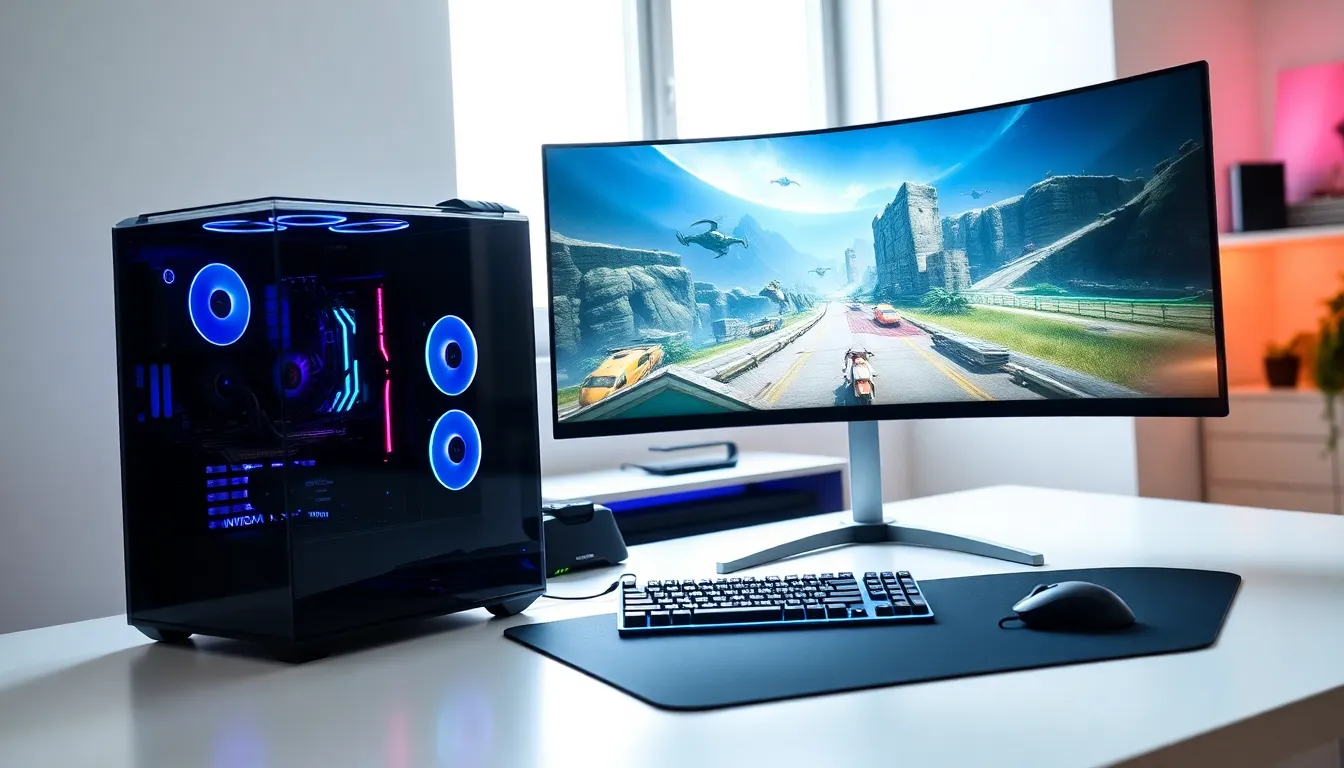

PC gaming refers to playing video games on a personal computer rather than a dedicated console or mobile device. This form of gaming has existed since the 1970s and continues to grow in popularity today. Millions of players worldwide choose PCs for their flexibility, performance potential, and massive game libraries.
For newcomers, PC gaming can seem overwhelming at first. Different hardware options, software platforms, and technical settings create a learning curve. But, the basics are straightforward once someone understands the core concepts. This guide explains what PC gaming involves, how it compares to console gaming, and what beginners need to get started.
Table of Contents
ToggleKey Takeaways
- PC gaming offers unmatched hardware flexibility, allowing players to customize and upgrade components over time instead of replacing entire systems.
- A gaming PC requires essential components including a dedicated GPU, mid-range CPU, 16GB of RAM, and an SSD for optimal performance.
- PC gaming provides access to the largest game library of any platform, including exclusive strategy games, indie titles, and decades of backward-compatible classics.
- Getting started with PC gaming costs between $600-$800 for a capable system, with software savings from Steam sales offsetting higher initial hardware costs.
- Beyond gaming, a PC serves multiple purposes including productivity, content creation, and streaming—making it a versatile investment.
How PC Gaming Differs From Console Gaming
PC gaming and console gaming share the same goal, playing video games, but they differ in several important ways.
Hardware Flexibility
Consoles like the PlayStation 5 or Xbox Series X use fixed hardware. Every unit contains identical components. PC gaming offers customization instead. Players can choose their processor, graphics card, memory, and storage. They can upgrade individual parts over time rather than buying an entirely new system.
This flexibility means PC gaming spans a wide performance range. A budget PC handles casual games and older titles. A high-end gaming PC runs the latest releases at maximum settings with smooth frame rates.
Game Library and Platforms
PC gaming provides access to the largest selection of games available on any platform. Steam, Epic Games Store, GOG, and other digital storefronts offer thousands of titles. Many PC games never release on consoles at all. Strategy games, simulation titles, and indie releases often remain PC exclusives.
Backward compatibility also favors PC gaming. A modern computer can run games from decades ago with proper configuration. Console players typically lose access to older libraries when new hardware generations arrive.
Input Methods
Console gaming relies primarily on controllers. PC gaming supports keyboards, mice, controllers, joysticks, racing wheels, and more. Many competitive players prefer mouse-and-keyboard setups for shooters and strategy games because they offer greater precision.
Cost Considerations
Consoles have lower upfront costs. A new console costs $400-$500 at launch. PC gaming requires a larger initial investment for comparable performance. But, PC games frequently sell at deeper discounts through Steam sales and other promotions. Over time, software savings can offset higher hardware costs.
Essential Hardware for PC Gaming
Building or buying a gaming PC requires understanding key components. Each part affects performance in specific ways.
Graphics Card (GPU)
The graphics card handles visual processing. It determines how games look and how smoothly they run. Modern PC gaming demands a dedicated GPU from NVIDIA or AMD for serious performance. Integrated graphics work for basic titles but struggle with demanding games.
Popular options include NVIDIA’s GeForce RTX series and AMD’s Radeon RX lineup. Budget-conscious players can find capable cards in the $200-$300 range. Enthusiasts spend $500 or more for top-tier performance.
Processor (CPU)
The processor manages game logic, physics calculations, and overall system tasks. Intel and AMD produce gaming-capable CPUs at various price points. A mid-range processor from either company handles most games without bottlenecking the graphics card.
Memory (RAM)
16GB of RAM serves as the current standard for PC gaming. This amount handles modern titles comfortably. 32GB provides extra headroom for streaming, multitasking, or future-proofing.
Storage
Solid-state drives (SSDs) have become essential for PC gaming. They reduce loading times dramatically compared to traditional hard drives. A 1TB NVMe SSD provides a good starting point, with additional storage added as game libraries grow.
Monitor
The display matters as much as internal components. A 1080p monitor at 144Hz offers smooth gameplay for competitive titles. Higher resolutions like 1440p or 4K showcase graphical fidelity but require more powerful hardware to drive them.
Benefits of Gaming on a PC
PC gaming delivers advantages that attract millions of dedicated players.
Superior Graphics and Performance
High-end PCs outperform consoles in raw power. They run games at higher resolutions, faster frame rates, and with better visual effects. Ray tracing, ultra-wide monitor support, and unlocked frame rates give PC gamers options console players don’t have.
Modding Communities
PC gaming supports game modifications that extend and transform titles. Skyrim, Minecraft, and countless other games have thriving mod scenes. Players create new content, fix bugs, and add features developers never included. This extends the lifespan of games far beyond their original release.
Versatility Beyond Gaming
A gaming PC handles productivity, content creation, streaming, and general computing. Console owners need separate devices for these tasks. A single PC investment serves multiple purposes.
Free-to-Play Options
PC gaming offers extensive free-to-play games. Titles like Fortnite, League of Legends, Valorant, and Dota 2 cost nothing to play. New players can experience PC gaming without buying software immediately.
Backward Compatibility
Older games remain playable on modern systems. PC gaming preserves access to decades of gaming history. Emulators even allow playing classic console titles on a computer.
Getting Started With PC Gaming
Beginners have several paths into PC gaming depending on their budget and technical comfort level.
Pre-Built vs. Custom Systems
Pre-built gaming PCs offer convenience. Companies like NZXT, iBUYPOWER, and mainstream manufacturers sell ready-to-use systems. Buyers sacrifice some value but skip the building process.
Custom-built PCs provide better value and component choices. Building requires research and careful assembly, but countless tutorials make the process accessible. First-time builders often complete their systems in a few hours.
Software Setup
Steam dominates PC gaming distribution. Creating a free account provides access to thousands of games and frequent sales. Epic Games Store offers free games weekly, making it worth installing alongside Steam.
Keeping graphics drivers updated ensures optimal performance. NVIDIA GeForce Experience and AMD Radeon Software simplify this process.
Starting Game Recommendations
New PC gamers should try genres that showcase the platform’s strengths. Strategy games like Civilization VI or Age of Empires IV play best with mouse-and-keyboard controls. First-person shooters demonstrate the precision advantage of mouse aiming. Indie titles on Steam introduce creative experiences unavailable elsewhere.
Budget Approaches
PC gaming doesn’t require massive spending. A $600-$800 system plays most games at acceptable settings. Steam sales, Humble Bundle, and free-to-play titles stretch gaming budgets further. Upgrading components over time spreads costs across years rather than requiring complete system replacements.